Table of Contents
ToggleOutdoor fitness vs gym workouts, it’s a debate that sparks strong opinions on both sides. Some people swear by the fresh air and freedom of exercising outside. Others prefer the climate-controlled environment and specialized equipment of a gym. The truth? Neither option is universally better. The right choice depends on individual goals, lifestyle, and preferences. This guide breaks down the key differences between outdoor and indoor exercise, compares health benefits, examines practical factors like cost and convenience, and helps readers decide which approach fits their fitness journey best.
Key Takeaways
- Outdoor fitness vs gym workouts isn’t about which is universally better—the right choice depends on your goals, lifestyle, and preferences.
- Gyms excel at muscle building and strength training due to precise equipment and progressive overload tracking.
- Outdoor exercise burns more calories on uneven terrain, provides vitamin D from sunlight, and delivers stronger mental health benefits according to research.
- Outdoor fitness costs almost nothing compared to gym memberships, making it ideal for budget-conscious exercisers.
- A hybrid approach—combining gym sessions with outdoor workouts—captures the benefits of both environments and improves long-term consistency.
- Choose based on your primary goal: gym for muscle building, outdoor fitness for mental health, and either option for weight loss depending on what keeps you motivated.
Key Differences Between Outdoor and Indoor Exercise
The outdoor fitness vs gym debate starts with understanding what each option actually offers.
Environment and Atmosphere
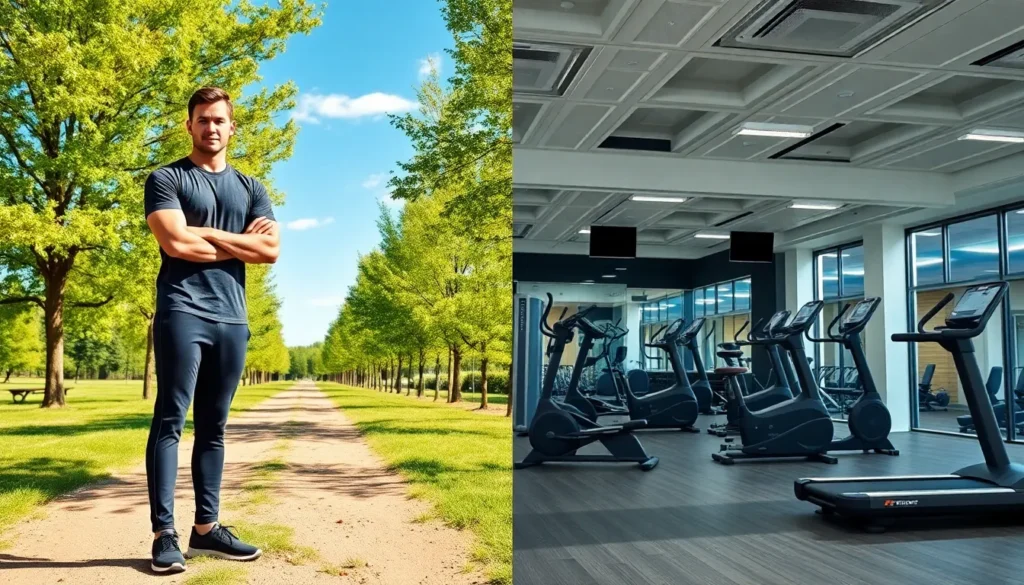
Outdoor workouts happen in parks, trails, beaches, and neighborhoods. The scenery changes. The terrain varies. Weather plays a role, sometimes a motivating one, sometimes a challenging one.
Gym workouts occur in controlled spaces. Temperature stays consistent. Lighting remains predictable. Music often pumps through speakers, and other members create a shared energy.
Equipment and Exercise Options
Gyms provide weight machines, free weights, cardio equipment, and often specialized gear like cable systems and squat racks. This equipment allows for precise muscle targeting and progressive overload tracking.
Outdoor fitness relies more on bodyweight exercises, running, cycling, and natural obstacles. Some parks offer pull-up bars and parallel bars. But most outdoor exercise uses the body itself as resistance.
Structure and Guidance
Indoor facilities often include personal trainers, group classes, and instructional signage. Beginners can access guidance easily.
Outdoor exercisers typically self-direct their workouts. They follow running apps, YouTube tutorials, or simply create their own routines. This requires more initiative but offers greater flexibility.
Social Dynamics
Gyms foster a community atmosphere. Members see familiar faces. Group fitness classes create accountability.
Outdoor fitness can feel more solitary, or more social, depending on the approach. Running clubs, boot camp groups, and outdoor yoga classes build strong communities too.
Physical and Mental Health Benefits Compared
Both outdoor fitness and gym workouts deliver significant health improvements. But they affect the body and mind in distinct ways.
Physical Benefits of Gym Workouts
Gyms excel at building muscle mass and strength. The variety of weights and machines allows for targeted training. Someone can isolate their biceps, strengthen their lower back, or develop their glutes with specific exercises.
Progressive overload becomes easier to track indoors. Adding five pounds to a barbell or increasing resistance on a machine creates measurable progress. This precision helps athletes and bodybuilders optimize their training.
Cardio machines also provide controlled conditions. Treadmills maintain exact speeds. Stationary bikes measure watts precisely. This data helps people train in specific heart rate zones.
Physical Benefits of Outdoor Exercise
Outdoor fitness vs gym comparisons often favor outdoor workouts for calorie burn. Uneven terrain engages stabilizer muscles. Wind resistance challenges the body differently than indoor conditions.
Studies show that outdoor runners burn more calories than treadmill runners at the same perceived effort level. The variable environment demands more from the body.
Sunlight exposure during outdoor exercise triggers vitamin D production. This supports bone health, immune function, and hormone regulation. Many indoor exercisers miss this benefit entirely.
Mental Health Differences
This is where outdoor fitness really shines. Research from Stanford University found that walking in nature reduces activity in the brain region associated with depression. Green spaces lower cortisol levels and reduce anxiety.
The Japanese practice of “forest bathing” demonstrates how natural environments improve mood. Outdoor exercisers report higher enjoyment and greater likelihood of continuing their routines long-term.
Gym workouts provide mental benefits too. The discipline of showing up builds confidence. Lifting heavy weights releases endorphins. But the mental health advantages of outdoor fitness appear consistently stronger in scientific literature.
Cost, Convenience, and Accessibility Factors
Practical considerations often determine which option people actually stick with. The outdoor fitness vs gym decision isn’t just about what’s ideal, it’s about what’s realistic.
Financial Comparison
Outdoor exercise costs almost nothing. A good pair of running shoes runs about $100-$150. Beyond that, nature is free. Parks charge no admission. Sidewalks don’t require membership fees.
Gym memberships range from $10 monthly at budget chains to $200+ at premium facilities. Add personal training, and costs climb quickly. Equipment, specialized classes, and amenities all factor into pricing.
For budget-conscious exercisers, outdoor fitness wins decisively.
Time and Convenience
Convenience depends on individual circumstances. Someone living near a beautiful park has easy access to outdoor fitness. Someone in a dense urban area without green space might find gyms more accessible.
Travel time matters. A gym across town adds 30 minutes to each workout. A running trail behind someone’s house takes 30 seconds to reach.
Weather creates the biggest convenience gap. Gyms operate regardless of rain, snow, or extreme heat. Outdoor fitness sometimes requires schedule flexibility or weather-appropriate gear.
Accessibility Considerations
Gyms often provide modifications for various fitness levels and physical limitations. Machines offer supported movement patterns. Staff can suggest alternatives.
Outdoor environments may present barriers, uneven surfaces, lack of shade, or absence of facilities. But, many communities now offer accessible trails and outdoor fitness equipment designed for diverse needs.
How to Choose the Best Option for Your Goals
The outdoor fitness vs gym question eventually comes down to personal priorities. Here’s how to match the choice to specific goals.
For Muscle Building and Strength
Choose the gym. Access to progressive resistance equipment makes strength training more effective. Barbells, dumbbells, and machines allow for precise loading that bodyweight exercises can’t replicate easily.
For Weight Loss and General Fitness
Both options work well. Outdoor fitness often produces better adherence because people enjoy it more. Higher enjoyment leads to more consistent workouts. Consistency drives results.
But, some people thrive on the structured accountability of a gym environment. Group classes and scheduled sessions keep them on track.
For Mental Health and Stress Relief
Outdoor fitness typically delivers stronger mental health benefits. The combination of physical activity, natural light, and green surroundings creates a powerful mood boost.
For Social Connection
This depends on individual preferences. Gyms offer built-in social environments. Outdoor fitness requires more intentional community-building through clubs or groups.
The Hybrid Approach
Many fitness enthusiasts don’t choose, they combine both. They might lift weights at the gym twice weekly and run outdoors three times. This approach captures the benefits of each environment.
Seasonal adjustments make sense too. Outdoor fitness during pleasant weather, gym workouts during harsh winters. Flexibility often produces the best long-term results.